

 Tonight Peaks & Pints leans hard into the small, glorious miracle that is Belgian beer meeting cheese and deciding, together, to out-elegance everything else in the room. This is not an accident; it’s part of de Belgian Beerloo, our weeklong love letter to abbey ales, wild fermentations, and yeast that behaves like it has opinions, running straight through Sunday, July 21, Belgian National Day. Merchant du Vin — Seattle’s quiet ringmaster of European beer greatness, wrangling icons like Lindemans, Brasserie du Bocq, Westmalle Trappist, and Trappistes Rochefort — supplies the liquid poetry, while Courtney C. Johnson takes care of the curds.
Johnson is a cheesemonger, a certified curd nerd, and a PhD with an ACS CCP, which is to say she can talk terroir, microbes, and milk with equal parts rigor and delight. She’s the mind behind PhCheese, a blog devoted to demystifying cheese without draining it of joy, and tonight she’ll guide you through five local artisanal cheeses paired with five Belgian beers, explaining where each cheese was farmed, who made it, and whether it grew up organic, biodynamic, or just stubbornly excellent. The pairing begins at 6 p.m. inside Peaks & Pints, costs $30, and promises a tidy recalibration of your palate. If commitment scares you, the Belgian beers are also available all day as a $14 flight — Craft Beer Crosscut 7.17.19: Flight by Merchant du Vin — because sometimes you just want the monks without the milk.
Craft Beer Crosscut 7.17.19: Flight by Merchant du Vin
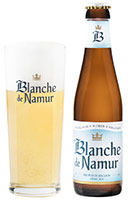 Du Bocq Blanche de Namur
4.5% ABV, 11 IBU
In 1320, near Yvoir-Purnode, Belgium, Princess Blanche of Namur was born. Fifteen years later, her father, Count of Namur, allowed King Magnus IV of Sweden to court his daughter. They married a year later, and Princess Blanche became Queen Blanche of Sweden and Norway. In memory of her “sweetness, beauty, and delicacy,” Brasserie Du Bocq dedicated their witbier to her. Blanche de Namur is made from barley malt, unmalted wheat, hops, and the classic witbier spices: coriander and bitter orange peel. It also has a touch of brewer’s licorice. It’s a mellow beer, thirst-quenching but smooth, with slightly acid flavor, powdery consistency on the tongue, but not bitter. Cheese paired at 6 p.m.: Samish Bay Creamery Aged Ladysmith
 Lindemans Jonge Lambik
5% ABV
Lambics, wild-fermented beers from Belgium’s Senne River Valley, show complex, interesting, sour flavors. Brewers like Lindemans blend lambic batches from different years to make gueuze, and also often add fruit for beautiful balance. Lindemans has begun to package newly-fermented, unblended single-batch lambic in kegs: Jonge Lambik, which translates to “Young Lambic.” It’s basically a pure, rare, young, uncarbonated, unblended, unsweetened lambic. It hits the nose with oak, barnyard funk, lemon, grass, cheese must, with a finish of funky and soured yeast. Taste has some lime and more wood from the smell, plus a little lambic sweetness before the sour and funk finish. Body is a little thin, but otherwise a very authentic and nice lambic. Cheese paired at 6 p.m.: Lost Peacock Creamery Whipped Chevre
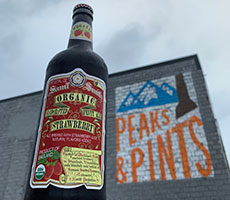 Lindemans Strawberry
4.1% ABV, 12 IBU
Indigenous to the Senne Valley of Belgium, lambics stem from a farmhouse brewing tradition several hundred years old. These brews are spontaneously fermented — meaning pots containing the wort are left outside and uncovered, allowing whatever critters happen to be flying by on a passing breeze to ferment the beer. These wild yeast give lambics their distinct tartness. Most Belgian brewers also utilize aged hops, which add antibacterial properties to the beer, rather than bitterness or flavor. In the case of fruit lambics, whole fruits are traditionally added after halfway through fermentation to add sweetness and new dimensions of flavor. Lindemans Strawberry is the brewery’s most recent new fruited lambic. Choosing strawberry, one of the most noble of fruits, was easy: the complex sweetness of the fruit matches perfectly with the sourness of lambic, resulting in a unique balanced marriage of sweet and sour. The recipe was developed specifically for the ever-developing tastes in the US market. It sports a rosy hue, with a aroma of ripened strawberries. Shows complex, captivating flavors; delicate sweetness is balanced by traditional lambic tartness in the finish. Cheese paired at 6 p.m.: Tieton Farm & Creamery Velvet
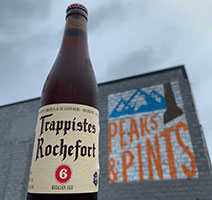 Abbaye Notre-Dame de Saint-Remy Trappistes Rochefort 6
9.2% ABV, 22 IBU
Abbaye Notre-Dame de Saint-Remy, which sits in a large valley close to Rochefort in the province of Namur, in Belgium, is home to a community of Trappist monks (Cistercians of the Strict Observance). The three brown ales produced by the abbey — Rochefort 6, Rochefort 8 and Rochefort 10— can be tasted in the nearby town of Rochefort and all over the world. Rochefort Trappist 6 is named after its original gravity measured in “Belgian degrees” — a brewing scale no longer used today. It was first sold to the public in 1953. Bottle-conditioned for soft natural carbonation, and the oldest of the three Rochefort Trappist beers, Rochefort 6 has the reddish color of autumn leaves, a soft body and an earthy, herbal palate (a hint of Darjeeling tea), which develops into a deep fruitiness. Refined, soft spiciness in the bouquet finishes with a bit caramel. Cheese paired at 6 p.m.: Cascadia Creamery Glacier Blue
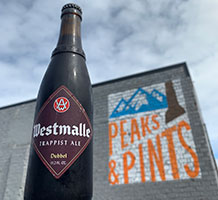 Brouwerij der Trappisten van Westmalle Dubbel
7% ABV, 24 IBU
In 1836 the Belgian Westmalle monastery became a Trappist Abbey and began brewing beer shortly thereafter. The holy suds they produced started out as an insider-only deal — a choice beverage to be made and enjoyed by Trappists and Trappists alone, but eventually they decided to expand and opened up a public beer hall in the early 1930s. Westmalle Dubbel is a dark, reddish-brown Trappist beer with a secondary fermentation in the bottle. The creamy head has the fragrance of special malt and leaves an attractive lace pattern in the glass. The flavor is rich and complex, herby and fruity with a fresh-bitter finish. It is a balanced quality beer with a soft feel in the mouth and a long, dry aftertaste. Cheese paired at 6 p.m.: Beecher’s Handmade Cheese Four-Year Aged Flagship