

 Trappist beer begins with a rule that feels almost rebellious in the modern beer economy: the brewery must operate within a Trappist monastery, the monks must oversee its direction, and the proceeds must support the abbey and its charitable works rather than investors or expansion plans. From that deceptively simple arrangement emerged some of the most influential beers on earth. For centuries, Trappist monks brewed not to build brands but to sustain a way of life. Their beers survived wars, shifting borders, economic upheavals, and every passing beverage craze largely because they were never designed to chase any of them. Today, only a small number of breweries may carry the Authentic Trappist Product seal, making each bottle feel less like a commodity and more like a liquid artifact from a living tradition.
And yet the remarkable thing about Trappist beer is how much individuality flourishes inside those shared boundaries. Westmalle helped define the modern dubbel and gave the tripel its blueprint. Chimay introduced generations of drinkers to abbey brewing’s deeper possibilities. Rochefort became synonymous with layered, cellar-worthy strength. Orval wandered off in its own wonderfully peculiar direction, embracing hops, wild yeast, and an evolving personality that continues to puzzle and delight beer lovers decades later. Then came England’s Mount Saint Bernard Abbey, quietly joining the Trappist family and proving the story was still being written. The common thread isn’t a specific style or flavor profile. It’s care. Every one of these beers carries the unmistakable imprint of patience.
For American drinkers, few companies have done more to share that heritage than Merchant du Vin. Since the late 1970s, the Seattle importer has served as a bridge between European brewing culture and curious American palates, introducing generations of beer lovers to breweries that shaped modern craft beer long before “craft beer” became a phrase. Their ongoing #TrappistTuesday campaign has become a standing invitation to revisit monastery classics, discover new favorites, and remember that some of the world’s most revered breweries still operate behind abbey walls, guided by values that feel refreshingly out of step with modern urgency.
Today’s flight follows a path through that landscape. We begin with two beers originally brewed for everyday monastery life, where nourishment mattered more than spectacle. The journey then deepens into Chimay Première, one of the foundational beers of the Trappist tradition, before arriving at Rochefort Triple Extra, a long-lost recipe returned to the world after a century-long absence. Finally, Orval closes the experience by cheerfully refusing to behave like any other Trappist beer. Together they tell a story of devotion, experimentation, continuity, and occasional rebellion — proof that even within a tradition built on discipline, there remains plenty of room for personality.
Peaks & Pints Terrific Trappist Tuesday Flight
 Mount Saint Bernard Abbey Tynt Meadow Blond
5% ABV | English Blond Ale | Leicestershire, England
England’s only Trappist brewery spent more than a century devoted to prayer, contemplation, and monastic life before beer entered the daily rhythm. Lemon zest, orange blossom, honeyed malt, and a whisper of vanilla unfold with measured elegance, each note seeming content to arrive in its own time. Fine bottle-conditioned carbonation keeps the beer lively and poised, while a faint bittersweet edge provides structure without demanding attention. The final impression is one of quiet confidence, as if the monks understand that some of the most memorable things in life rarely raise their voice.
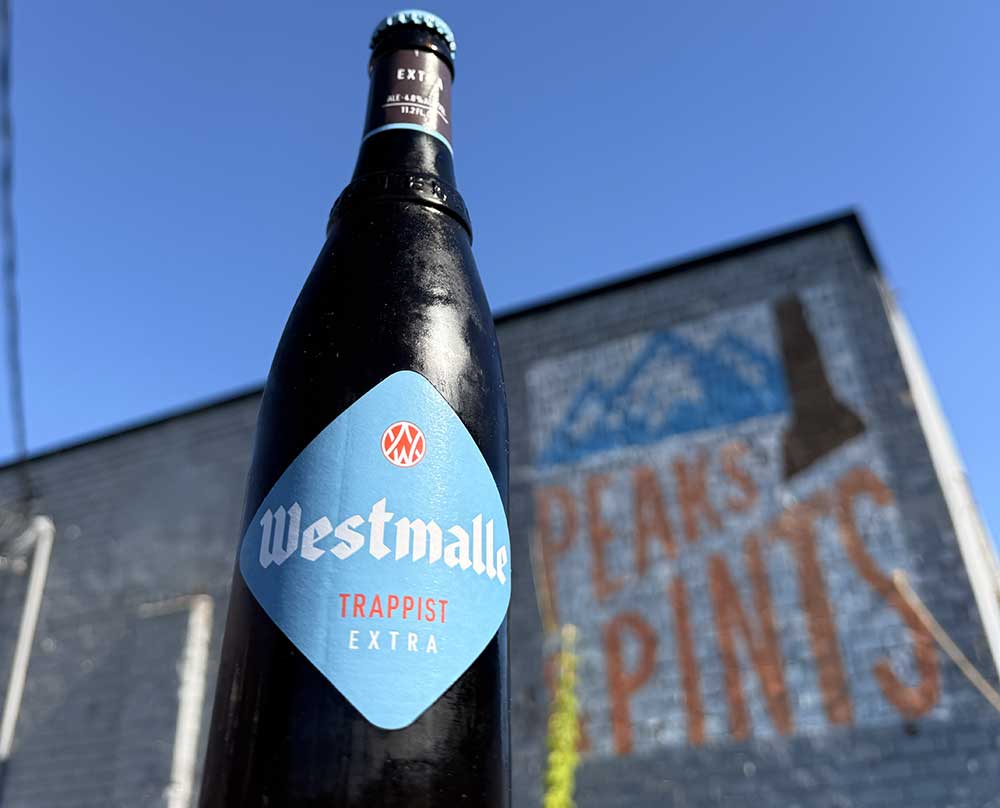 Brouwerij der Trappisten van Westmalle Westmalle Extra
4.8% ABV | Belgian Enkel / Patersbier | Westmalle, Belgium
Long before Westmalle became famous for shaping the modern dubbel and tripel, the monks brewed this golden ale for their own table. Fresh bread, orchard fruit, wildflower honey, and soft yeast spice move effortlessly across the palate, creating a beer that feels nourishing in the broadest and most satisfying sense of the word. Crisp carbonation and a dry finish keep everything agile and refreshing. There is an understated charm here, the sort that reveals itself slowly, reminding us that daily rituals often tell us more about a culture than its grandest celebrations.
 Chimay Première (Red)
7% ABV | Belgian Dubbel | Chimay, Belgium
The monks of Scourmont Abbey first brewed Chimay Première in 1862, and the beer still carries itself with the easy assurance of something that knows exactly what it is. Copper and mahogany hues glow beneath aromas of caramel, plum, apricot, and gentle spice, while layers of toasted malt and expressive yeast unfold with remarkable composure. Nothing rushes. Nothing strains. Bottle conditioning adds another dimension to the finish, leaving traces of fruit and spice that linger like stories passed from one generation of monks to the next.
 Abbaye Notre-Dame de Saint-Rémy Trappistes Rochefort Triple Extra
8.1% ABV | Belgian Tripel | Rochefort, Belgium
A century ago, the monks of Rochefort brewed a blond ale that quietly disappeared into history. In 2020, it returned. Bright citrus, honeyed grain, orchard fruit, and peppery yeast rise from the glass in vivid succession, carried by a body that somehow balances richness and lift with remarkable ease. The malt foundation provides gentle ballast beneath the lively aromatics, while a subtle herbal bitterness gathers everything neatly toward the finish. It drinks like a conversation between past and present, both sides finding plenty to admire in the other.
 Orval Trappist Ale
6.9% ABV | Belgian Trappist Pale Ale | Villers-devant-Orval, Belgium
Most Trappist beers seek harmony. Orval seems more interested in curiosity. Brewed since 1931 at the restored Abbaye Notre-Dame d’Orval, it opens with orange peel, fresh herbs, floral hops, and peppery yeast before revealing a dry, complex palate shaped by the brewery’s famous Brettanomyces character. Earthy nuances emerge where fruit once stood, bitterness lingers where sweetness might have settled, and the beer continues evolving long after it leaves the monastery. The result is equal parts puzzle, poem, and pint — endlessly fascinating and entirely comfortable remaining a little mysterious.
LINK: Peaks & Pints beer and cider cooler inventory